Category Archives: Miscellaneous

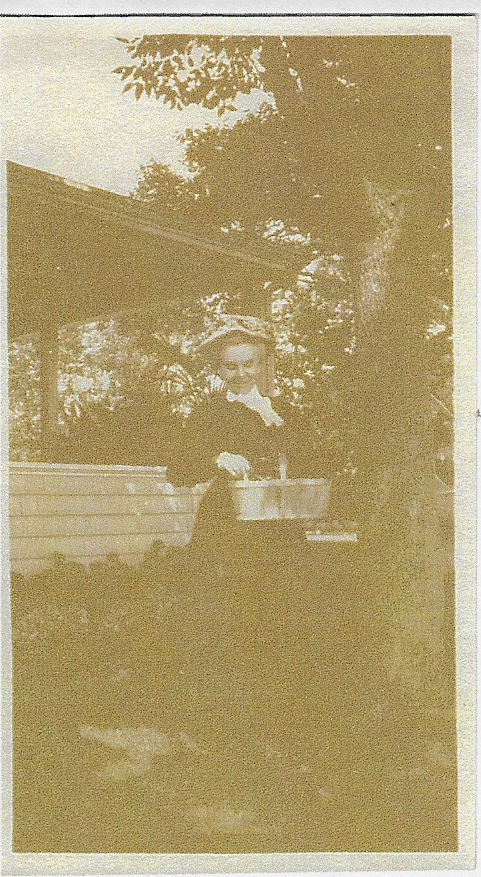
Who is Mary Julia Churchward? Part 1

Mary Julia Churchward


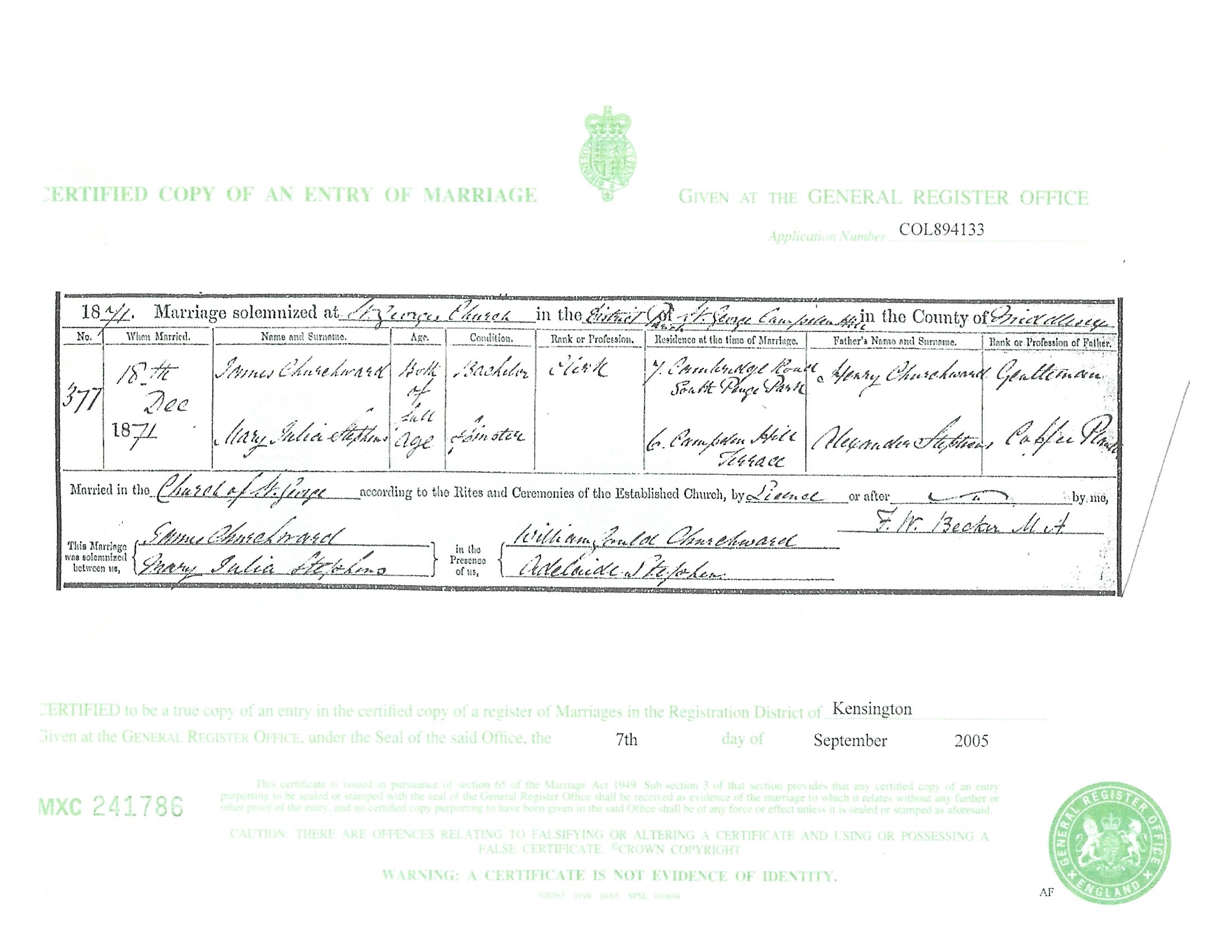
James Churchward married Mary Julia Stephens on December 18, 1871 in Kensington at St. Georges Church. Mary Julia had inherited her father’s tea plantations in Sri Lanka (then called Ceylon.)
Shortly thereafter in the October 15th 1872 Edition of the ‘Overland Ceylon Observer’ announced under Domestic Occurences, Births:

1872-10-15Ceylon_1

“At Parragalla Estate, Gampola, Oct. 9. Mary Julia, wife of J. Churchward. Esq., of a Son.”

1872-10-15Ceylon_2

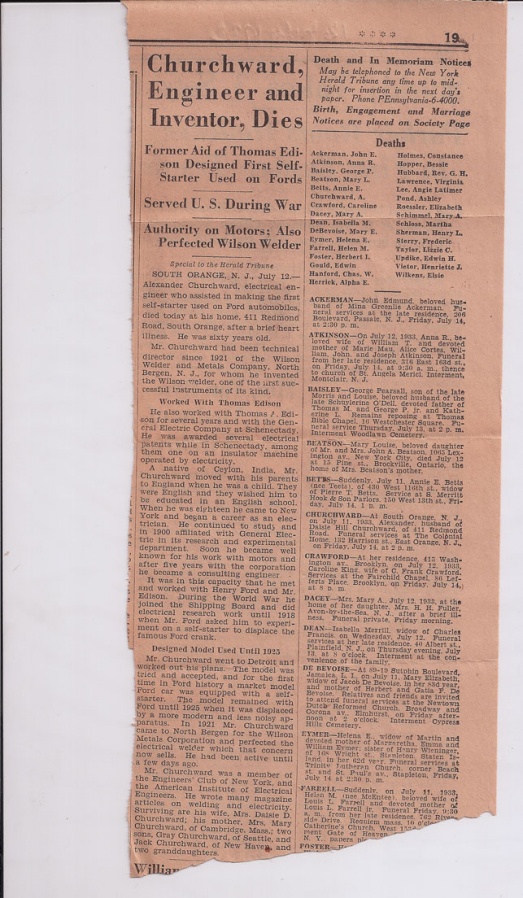
The son mentioned is my grandfather, Alexander Churchward, whose obituary is shown below:
523px-AChurchward_obit

The sad facts I have been able to put together are:

  • James and Mary Julia were estranged after 1881.
  • James lost his wife’s tea plantations, was arrested by the authorities, and escaped dressed as a “coolie.” (the term used in the correspondence)
  • James’ brother Albert helped support Mary Julia and my grandfather.
  • My father told me that James was persona non grata at his home and not even mentioned (and Mary Julia lived in the same house for six months every year.)


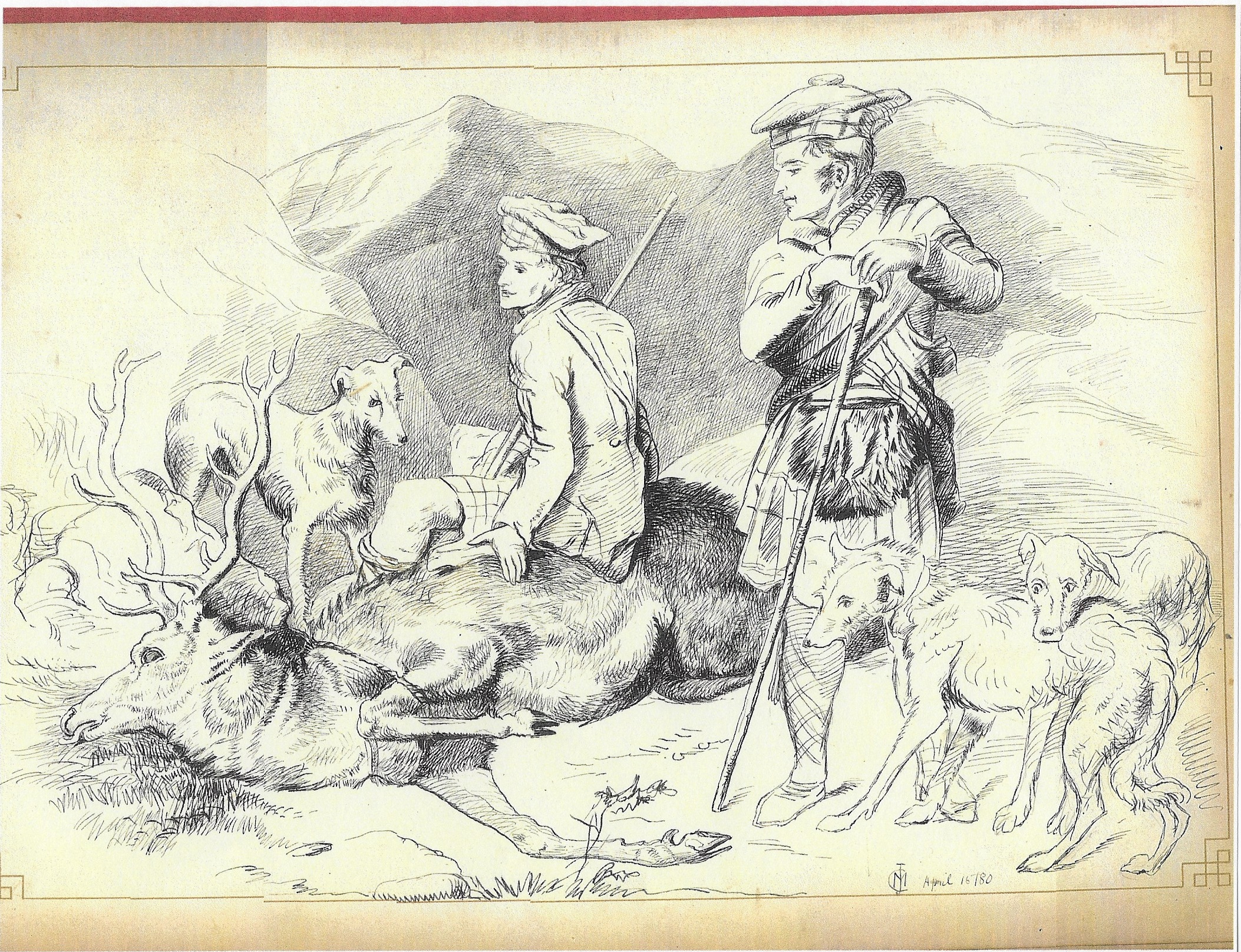
  • Mary Julia was an artist as well and made her living from it. The following are examples:
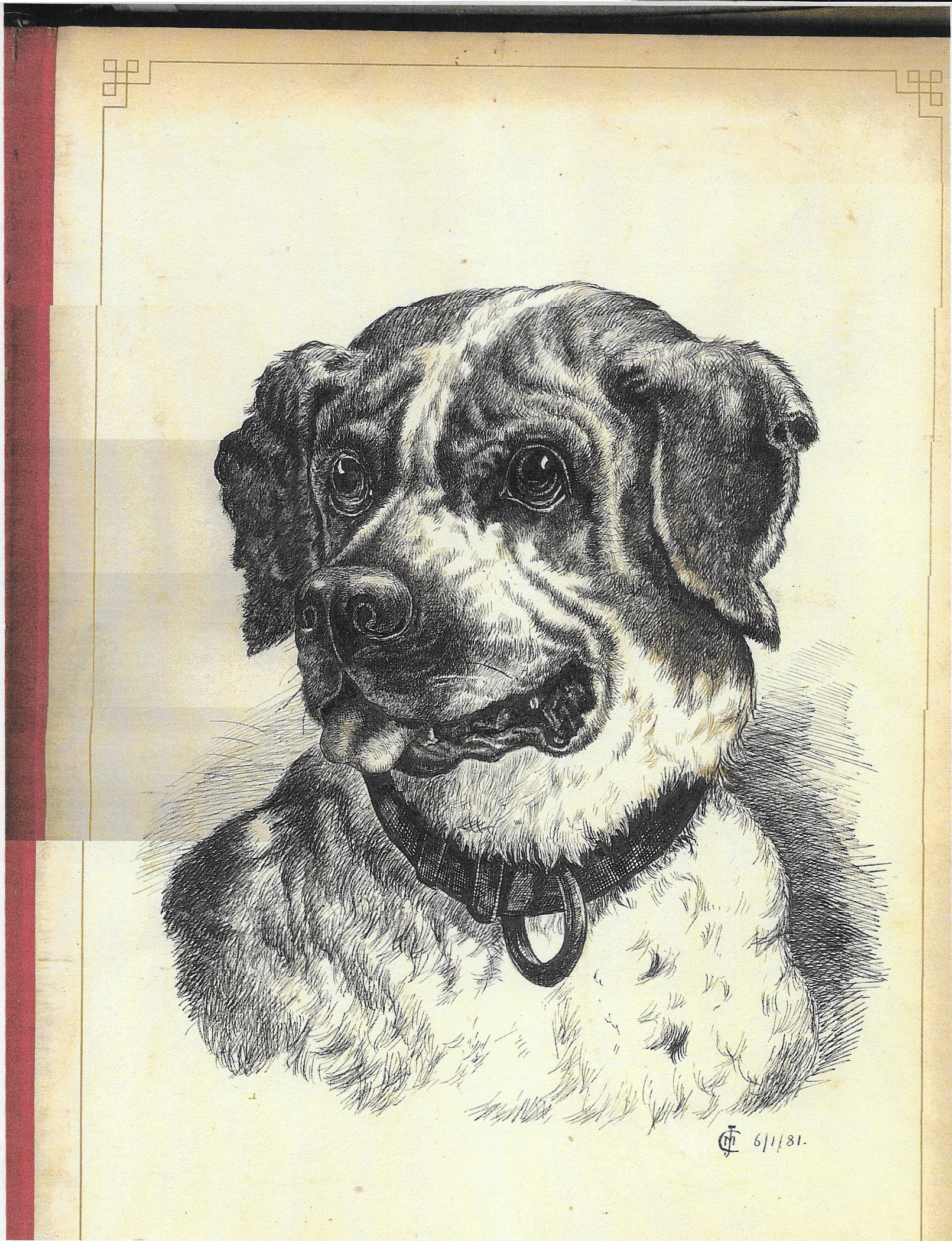
    Here is a closeup of her initials at the bottom of her drawings:
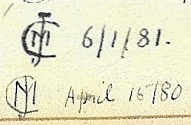
    This presentation of initials actually raises some perplexing issues which I will cover in the next part.


    As an aside, James resided with the Haier family (Mother Carolin and daughters Harriet, Pauline, Minnie and Louise) beginning in 1907. Later James received a large patent infringement settlement and “Mrs Louise (Haier) Churchward” purchased 7.22 acres on Lake Wononskopomuc in Lakeville, Connecticut in July 1914 where James, Louise, Harriet and her son, Howard Keresey lived until 1922. That year they moved to Mount Vernon, New York.
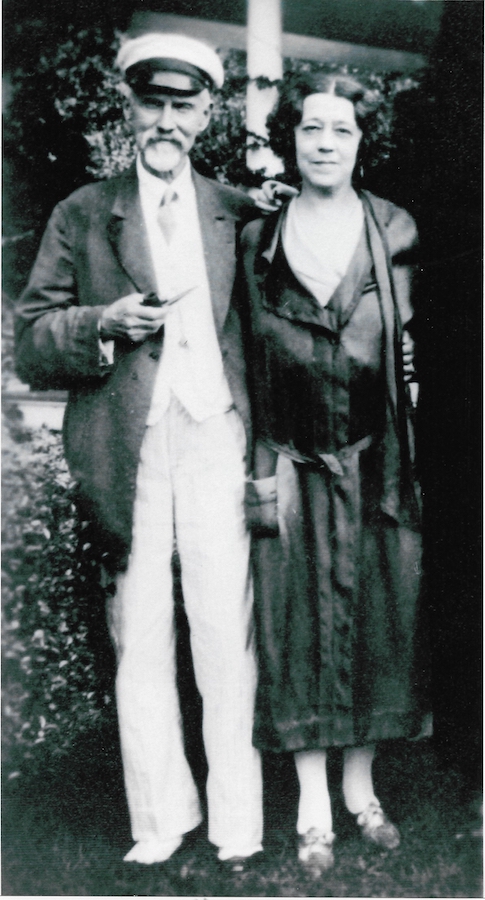
    Churchey & Louise
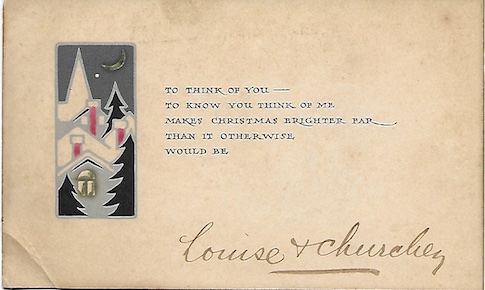

    Christmas Card from Louise and Churchey

    Fan Art: The Blueprint

    One of the positive results of James Churchward’s works is the community of his true believers. While we might not all agree on everything James wrote, I have found the community to be filled with basically friendly and tolerant individuals.

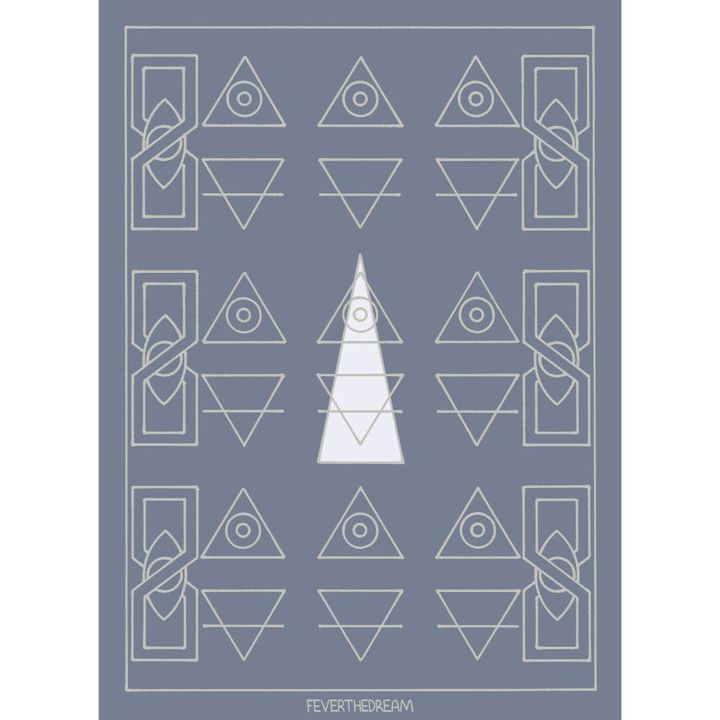
    Recently, my publisher sent an email connecting me with an artist on Instagram, the artist was so inspired by “The Children of Mu,” the following drawing was created:

    Artwork Title: The Blueprint

    Description: The inner part of the drawing displays the symbols of heaven and earth in a repetitive pattern. The repeating pattern symbolizes the idea of multiple dimensions all existing at once. The center triangle is a portal (of which I’ve had a vision of in the past and is the bases of most of my art pieces) The Portal naturally represents a way to and from the through and through.

    The outer infinity symbols represent two things at once. The first is eternal life. The second is angels/aliens/guardians. These, in particular, are surrounding and guarding all dimensions as well as possibly powering and operating the portals.

    If you wish to contact the artist, send an email and I’ll pass along your email address and any kind words you wish to invoke.

    Have a great day!

    New Zealand Quake Recalls Cataclysm Of ‘Lost Continent’ Mu

    Another article from James Churchward’s scrapbooks…

    Los Angeles Herald Feb. 5th 1931
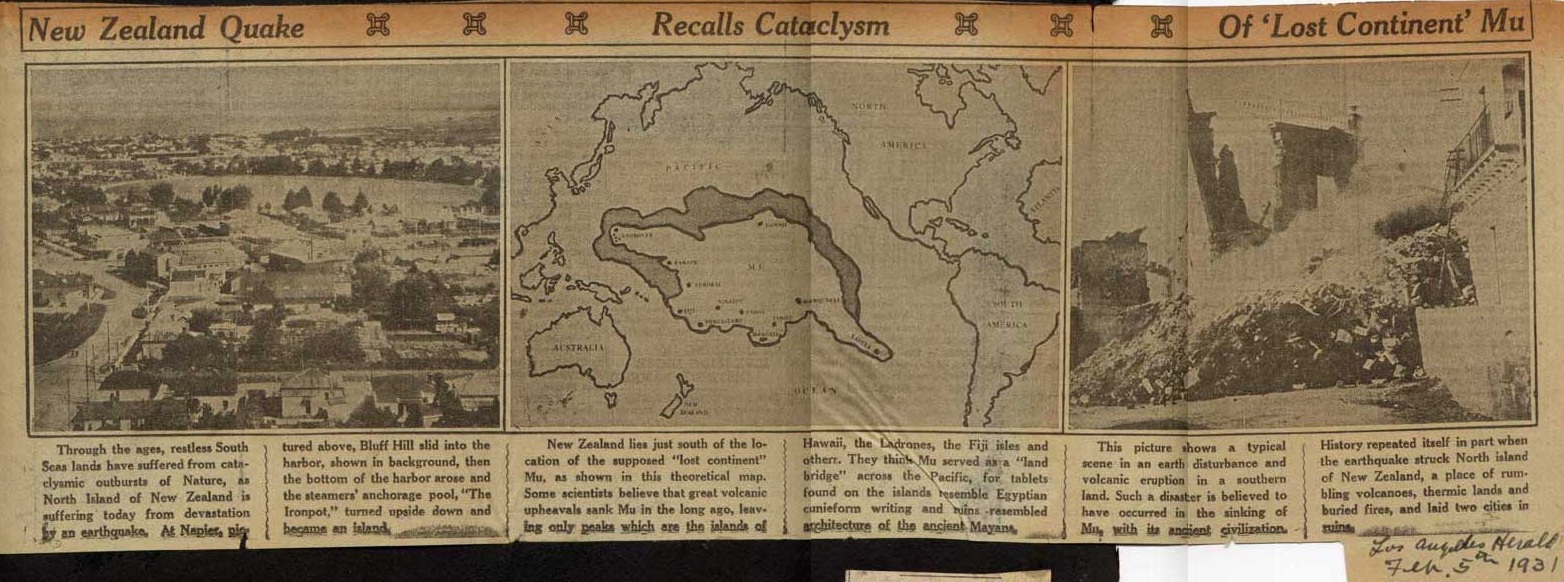
    New Zealand Quake Recalls Cataclysm Of ‘Lost Continent’ Mu

    Through the ages, restless South Seas lands have suffered from cataclysmic outbursts of Nature, as North Island of New Zealand is suffering from devastation by an earthquake. At Napier, pictured above, Bluff Hill slid into the harbor, shown in the background, then the bottom of the harbor arose and the steamers’ anchorage pool, ‘The Ironpot,’ turned upside down and became an island.

    New Zealand lies just south of location of the supposed “lost continent” Mu, as shown in this theoretical map. Some scientists believe that great volcanic upheavals sank Mu in the long ago, leaving only peaks which are the islands of Hawaii, the Ladrones, the Fiji isles and others. They think that Mu served as a ‘land bridge’ across the Pacific, for tablets found on the islands resemble Egyptian cuneiform writing and the ruins resembled architecture of the ancient Mayans.
    This picture shows a typical scene in an earth disturbance and volcanic eruption in a southern land. Such a disaster is believed to have occurred in the sinking of Mu with its ancient civilization. History repeated itself in part when the earthquake struck North island of New Zealand, a place of rumbling volcanoes, thermic lands and buried fires, and laid two cities in ruin.