Recently, I submitted a query to ChapGPT, “Did James Churchward write fiction?”
The response:
Yes — James Churchward did write fiction, although he’s best known for his pseudo-historical works.
What he wrote
Non-fiction / speculative history (most famous):
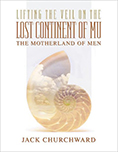
The Lost Continent of Mu (1926)
The Children of Mu
The Sacred Symbols of Mu
These are presented as non-fiction but are widely considered pseudoscience / speculative mythology.
Fiction:
The Treasure of Mu (1939)
This is explicitly a novel/adventure story, so yes — he did write at least one clear work of fiction.
Important distinction
Churchward blurred the line between fiction and non-fiction:
His “Mu” books were written as factual research.
Modern scholars classify them as fictional mythology framed as history.
Only The Treasure of Mu was openly marketed as a novel.
So:
Technically: Yes, he wrote fiction.
Practically: Most of his influence comes from books he claimed were real history but are now considered fictional.
Although all his pseudo-historical works were not listed, they did include a title that was surprising – The Treasure of Mu. I did a web search in an attempt to find a copy, however, I was only able to find a game called “Mu’s Impossible Treasure Hunt.”
ChatGPT was kind enough to provide a chapter by chapter summary:
Here is a chapter-by-chapter summary of The Treasure of Mu by James Churchward.
(Note: Chapter titles vary slightly by edition, but the structure and plot are consistent.)
Chapter 1 – The Legend of Mu
The novel opens with a discussion of the lost continent of Mu, described as an ancient, highly advanced civilization that predates all known cultures. The narrator introduces secret records and symbols said to preserve Mu’s knowledge.Chapter 2 – The Ancient Records
We meet the main characters: Western scholars and explorers who have gained access to mysterious tablets and manuscripts from Asia. These texts supposedly prove Mu once existed and hint at a surviving treasure.Chapter 3 – The Call to Adventure
The group decides to mount an expedition. The goal is not just treasure, but proof of Mu’s reality, which would revolutionize human history.Chapter 4 – Journey to the East
The expedition travels through India and Southeast Asia, encountering temples, monks, and secret societies who guard fragments of Mu’s knowledge.Chapter 5 – The Hidden Brotherhood
They discover an underground order sworn to protect Mu’s legacy. The brotherhood tests the explorers’ motives, warning that Mu’s knowledge is dangerous in the wrong hands.Chapter 6 – Symbols of Power
The group learns to interpret sacred symbols that function like a map. These symbols appear across ancient cultures, suggesting a single lost source civilization.Chapter 7 – The Pacific Trail
Clues lead them into the Pacific Ocean, where Mu supposedly sank. They investigate islands believed to be remnants of the continent.Chapter 8 – The Temple of the Sun
On a remote island, the explorers find a hidden temple with advanced architecture and inscriptions matching the Mu records.Chapter 9 – Traps and Trials
The temple is protected by mechanical and symbolic traps. These are meant to test wisdom, not strength — echoing Mu’s spiritual philosophy.Chapter 10 – The Inner Chamber
They reach the inner sanctum, where the “treasure” is revealed to be not gold, but preserved knowledge: records of Mu’s science, energy systems, and spiritual teachings.Chapter 11 – The True Treasure
The protagonists realize Mu’s greatest legacy was unity, peace, and advanced understanding of nature, not material wealth.Chapter 12 – The Choice
They must decide whether to reveal the discovery to the world or keep it hidden to prevent misuse.Chapter 13 – Return to the World
They return without physical treasure, carrying only copies of symbols and knowledge.Final Chapter – Epilogue
The narrator reflects that humanity is not yet ready for Mu’s wisdom, and that the truth must remain partially hidden.
Looking a little closer, I noticed The Treasure of Mu has a published date of 1939. Since James passed away in 1936, it is highly unlikely James was the author.
AI Chatbot said: I believe “The Treasure of Mu” is a fictional adventure story that’s attributed to either James Churchward Jr. or John Churchward.
James only recognized son (my grandfather,) was Alexander James Churchward (1872-1933.) Highly unlikely The Treasure of Mu was written by him and posthumously published under his name.
Therefore, it appears that Artificial Intelligence has created a new book and attributed it to James Churchward.
If anyone has further information (or knows of a copy) of The Treasure of Mu, it would be greatly appreciated to see a copy of the Title page. From that data, the author, publisher and date of publication can be determined and the conundrum solved.
btw, James did write fiction other than The Treasure of Mu – in the March 1895 Recreation magazine, he published the story, “INDIAN JOE, A TALE OF THE THOUSAND ISLANDS.” The rest can be called “pseudo-historical.”
Have a great day!






 RSS - Posts